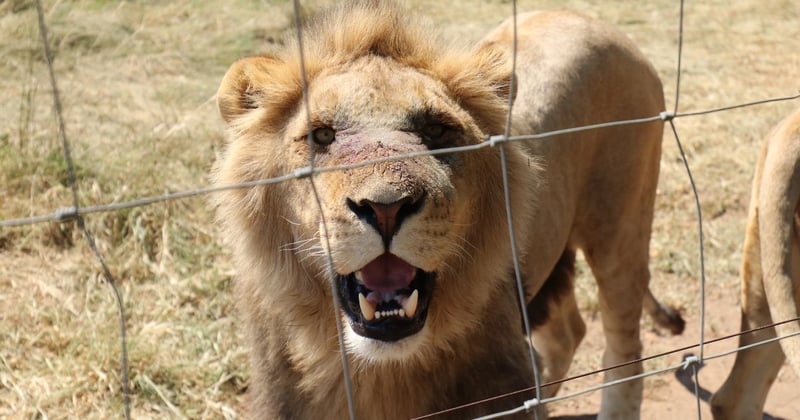
South Africa sets legal lion bone exports quota to zero
South Africa’s environment department sets lion bone export quota to zero, pushing to end captive lion exploitation.
South Africa’s Department of Forestry, Fisheries and the Environment (DFFE) has announced that it will not allow any legal exports of lion bones or derivatives, effectively setting the quota at zero for 2025.
This is a decision that sends a powerful signal to the captive lion breeding industry.
What the change means
The lion bone export quota determines how many lion skeletons (or parts) may be legally exported from South Africa in a given year. With the quota now set to zero, no commercial exports will be permitted under the law.
Lion bones are in demand for use in traditional medicine markets in China and Southeast Asia. Allowing legal trade can serve as a cover or incentive for illegal trade in wild-sourced lion bones or related parts. This change, therefore, is intended to cut off that potential legal pathway.
Advocacy, evidence, and pressure
This decision follows sustained advocacy and research. There has been evidence documented for years that links captive lion breeding, welfare abuses, and the illegal big cat bone trade.
Our report, Putting a stop to cruelty, lays out evidence that the industry is deeply problematic for animal welfare, conservation integrity, and public health.
You can make a difference for vulnerable animals
Donate now
When you make a donation, you’ll join a passionate group of supporters who are determined to change the world for animals. We’re fighting animal cruelty wherever we find it — are you with us?
South Africa’s Department of Forestry, Fisheries and the Environment has sent a strong message to the captive lion breeding industry by setting the export quota for lion bones to zero.
This decision stands firm against industry pressure and marks a vital step toward ending the exploitation of lions in South Africa.
While this is a victory for lions and a decisive step toward closing the cruel captive lion breeding industry, the work is not yet over.
The next step must be for the South African government to mandate a full and compulsory end to commercial captive lion breeding, and ensure that existing lion bone stockpiles are managed and responsibly disposed of as part of this phase-out.
Next steps and ongoing risks
While this zero export quota is a huge win, it’s not the end of the illegal wildlife trade.
The captive lion breeding industry remains active in South Africa. To prevent loopholes or covert trade, we encourage the government to now legislate a full ban on commercial captive lion breeding.
It is also crucial that existing stockpiles of lion bone or skeletons be accounted for and disposed of responsibly, so they cannot enter illegal markets.
We will continue to monitor this policy shift and advocate for its full implementation, enforcement, and expansion toward a permanent end of captive lion exploitation.