A baby monkey feeding while hearing the deep, reassuring voice of a big monkey is a touching moment that highlights communication and connection within primate families. When the infant settles down to eat—whether sipping milk from its mother or nibbling on soft fruit—it remains highly aware of the sounds around it. The voice of an adult monkey, often the mother, father, or a protective troop member, provides a sense of safety that allows the baby to feed calmly and confidently.
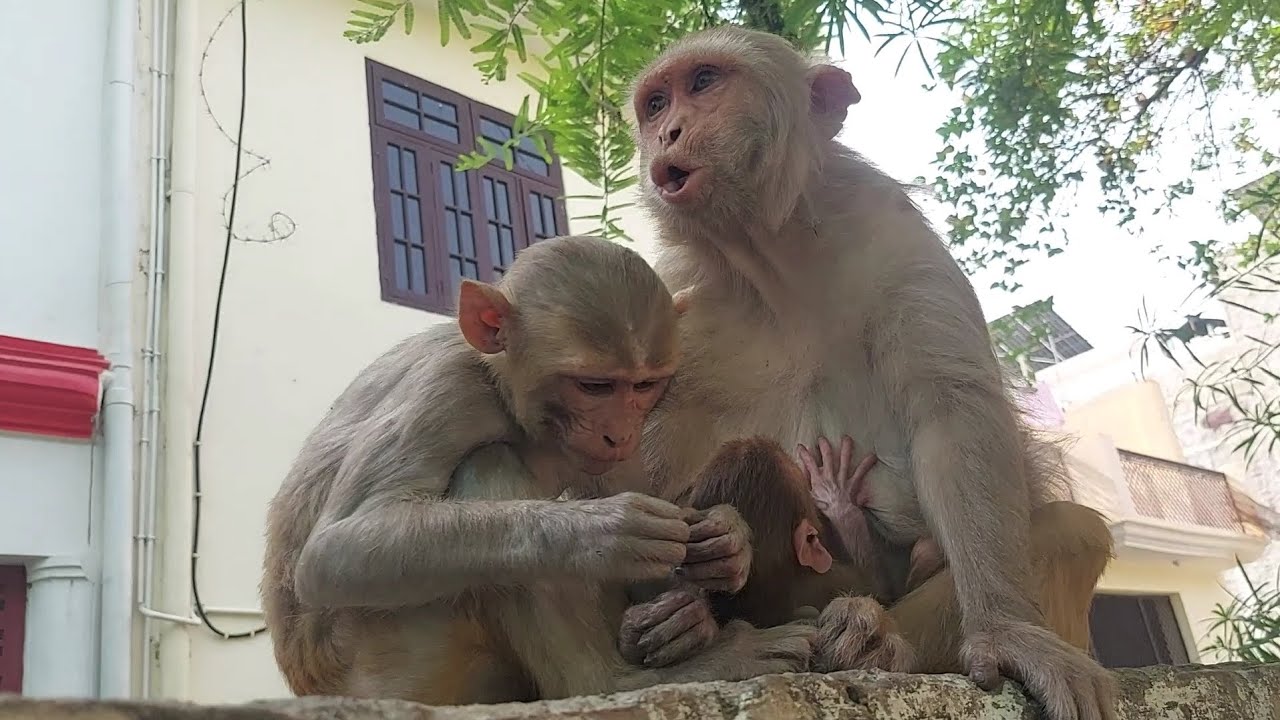
Adult monkeys use their voices to express a variety of messages: comfort, warning, direction, or reassurance. When a baby monkey hears this familiar, resonant voice nearby, it often reacts by pausing, looking up, or making small chirping sounds in response. These exchanges form an early foundation for communication. The baby learns to recognize tones that signal safety, affection, or potential danger. While feeding, the presence of a steady adult voice lets the infant know it is protected from threats, encouraging it to eat without fear.
In many primate groups, a big monkey—often a dominant male or experienced female—keeps watch over the younger ones while they feed. The low, confident vocalizations of the adult help maintain order within the troop. These sounds may not be directed at the baby specifically, yet the infant still interprets them as part of its secure environment. As the young monkey grows, it begins to imitate these vocal patterns, practicing tiny versions of the deeper calls it hears.
This combination of feeding and vocal communication strengthens social bonds within the troop. The baby monkey not only receives nourishment but also absorbs the rhythms and meanings of the group’s language. Through this blend of care, sound, and learning, the infant becomes better prepared for its future role in the complex and expressive world of monkey society.